


| Tour Fee | USD 700 per person |
|---|---|
| Application Deadline | ~ 15 May 2026 |
| Minimum Number of Participants | the tour may be cancelled if fewer than 20 people register. |
| Included in the Fee | Ground transportation and ferry fares Admission fees and activity costs Accommodation for 3 nights / 4 days (single room basis) Meals: 3 lunches and 3 dinners, plus 3 breakfasts |
| How to book | The tour may be requested as part of the online registration process. If the tour is cancelled due to insufficient number of participants, the payment will be refunded accordingly. |

| 13:30–15:00 | Transfer by chartered bus from the conference venue to Jeonnam Jeungdo Island [A Slow City] (88km) |
|---|---|
| 15:00–16:00 | Visit Salt Gallery |
| 16:00–17:00 | Transfer to Imjado Island (32km) |
| 17:00-18:30 | Visit Imjado Jeonjangpo Togul, Daegwang Beach |
| 18:30–20:00 | Dinner |
| From 20:00 | Check-in and rest |
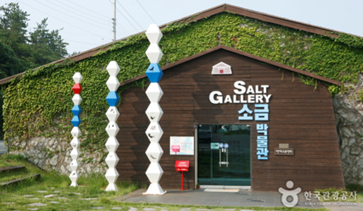
Jeungdo Island was the first city to be designated a ‘slow city’ in Asia thanks to its unspoiled nature and clean waters. It was assigned as a biodiversity conservation area by UNESCO.
Jeungdo Island also has Korea’s largest salt fields. At Taepyeong Salt Field, you can experience real life in a fishing village. There is a tour of the salt museum and hands-on programs for tourists to make the experience more personal. There are some 90 uninhabited islands and islets neighboring the Jeungdo Island. The Wujeon Beach Resort offers a magnificent view of the horizon. The mud hopper bridge, which stands in the mudflats, along with the relic of a historical monument and wetland ecology exhibition hall, are some of the things you can see on the island of Jeungdo.
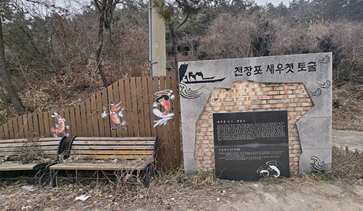
Imjado Jeonjangpo Togul is a traditional underground cellar located on Imjado Island, Korea. Shaped by nature and preserved through local heritage, this unique space offers a cool and stable environment that has long been valued for traditional storage and fermentation. More than just a structure, Jeonjangpo Togul reflects the wisdom of island life and the enduring culture of Korea’s coastal communities.
| 05:00 | Wake-up and pack-up |
|---|---|
| 05:30 | Transfer by chartered bus to Mokpo Coastal Passenger Terminal (73km) Breakfast in Mokpo City |
| 07:50–10:30 | Ferry from Mokpo to Hongdo Island **The destination may change depending on weather and sea conditions |
| 10:50 | Check-in and luggage storage at a motel or pension |
| 11:00–12:00 | Lunch on Hongdo |
| 12:30–14:30 | Island cruise / sightseeing by boat |
| 15:00–17:30 | Local excursion on Hongdo Island |
| 18:30-20:00 | Dinner |
| 20:00 - | Overnight stay on the island |
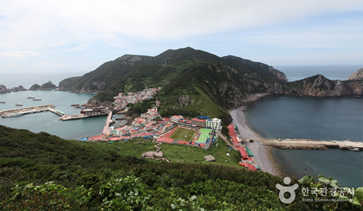
Hongdo Island is a picturesque island located about a 2-hour and 30-minute ferry ride from Mokpo Harbor. The island earned its name due to its striking red appearance during sunset. It boasts stunning rock formations, coastal cliffs, and clear blue seas, creating a beautiful natural landscape. Designated as a protected area with rare plants and animals, it is recognized as a natural monument. One of the best ways to experience Hongdo Island is by taking a sightseeing boat tour to explore its surrounding 33 rocky islets and cliffs.
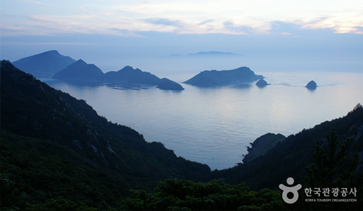
Heuksando Island is located at the southern end of Korea about 92.7 km away from Mokpo. It is composed of 11 uninhabited islands and 89 inhabited islands. Because of its natural beauty, it has been designated as part of Dadohae National Marine Park along with the nearby islands.
| 08:00 | Wake-up and pack-up Breakfast |
|---|---|
| 10:30-13:10 | Return ferry from Hongdo Island to Mokpo City Lunch |
| 13:30- 15:00 | Transfer by chartered bus to Daeheungsa Temple(69km) |
| <Temple Stay Program> | |
| 15:00 | Arrival at Daeheungsa Temple and room assignment |
| 16:10 | Temple etiquette orientation and temple tour |
| 17:00 | Dinner at the temple dining hall |
| 18:00 | Evening Buddhist service (optional) |
| 18:30 | Lotus lantern making |
| 20:30 | Wash-up |
| 21:00 | Bedtime |
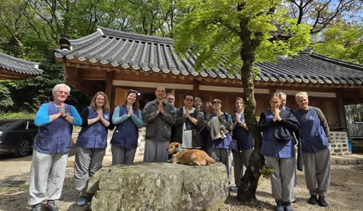
Daeheungsa Temple, located on Duryunsan Mountain, is said to have been founded by Monk Ado in the 22nd year of King Seong of Baekje. In 2018, it was inscribed on the UNESCO’s World Heritage List as part of the “Sansa, Buddhist Mountain Monasteries in Korea.” Also known as a temple where the spirit of Buddhism for national protection remains alive, Daeheungsa Temple served as the main base for monk soldiers led by Seosan Daesa during the Japanese invasions of Korea. Later, Seon Master Choui, who believed that the truth of the Buddha and the joy of meditation could be found in tea, built Iljiam Hermitage in the valley of Daeheungsa Temple.
| <Temple Stay Program> | |
| 04:00 | Wake-up |
| 04:10 | Early morning Buddhist service at Daeungbojeon Hall (optional) |
| 06:00 | Breakfast at the temple dining hall |
| 09:00 | Morning forest walk |
| 10:00 | Tea conversation with a monk and tea ceremony experience |
| 11:00 | Reflection writing and satisfaction survey |
| 11:30 | Lunch |
| 12:00 | Closing ceremony |
| Transfer by chartered bus from Daeheungsa to Mokpo KTX Station(66km) | |
| End of Program |

